Dubai’s New Al Meydan Highway: What the Major Road Project Means for Residents and Real Estate
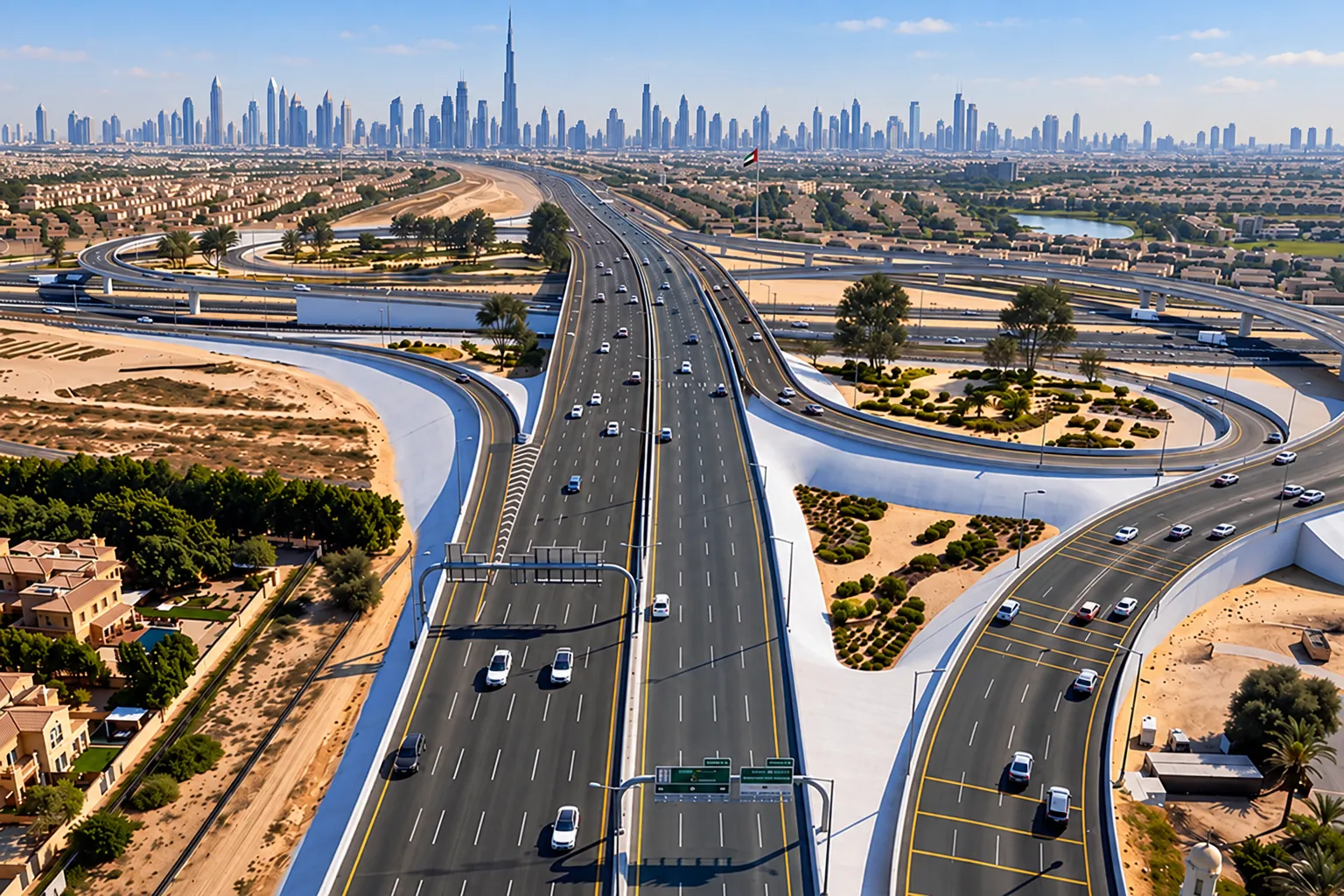
Dubai is preparing for another major expansion of its road network with the development of Al Meydan Street as a strategic highway corridor running parallel to Al Khail Road and Sheikh Mohammed bin Zayed Road.
The AED 1.161 billion project is designed to improve traffic distribution, create faster connections between established communities and support the city’s continued urban expansion. It will include 17 kilometres of new and upgraded roads, 3.7 kilometres of bridges, multi-level interchanges and connected cycling routes.
Once completed, the new corridor is expected to increase north–south road capacity, reduce travel times and improve access to several important residential and development areas across Dubai. The project is currently scheduled for completion by the end of 2028.
What Is the New Al Meydan Highway Project?
The project involves a comprehensive redevelopment of Al Meydan Street, transforming it into a more efficient supporting corridor for two of Dubai’s busiest arterial roads.
Rather than functioning as an isolated highway, the upgraded route will connect several major roads and distribute vehicles more effectively across the wider transport network. It will extend from First Al Khail Street to Umm Suqeim Street and pass through important connections including:
- Al Khail Road
- Latifa bint Hamdan Street
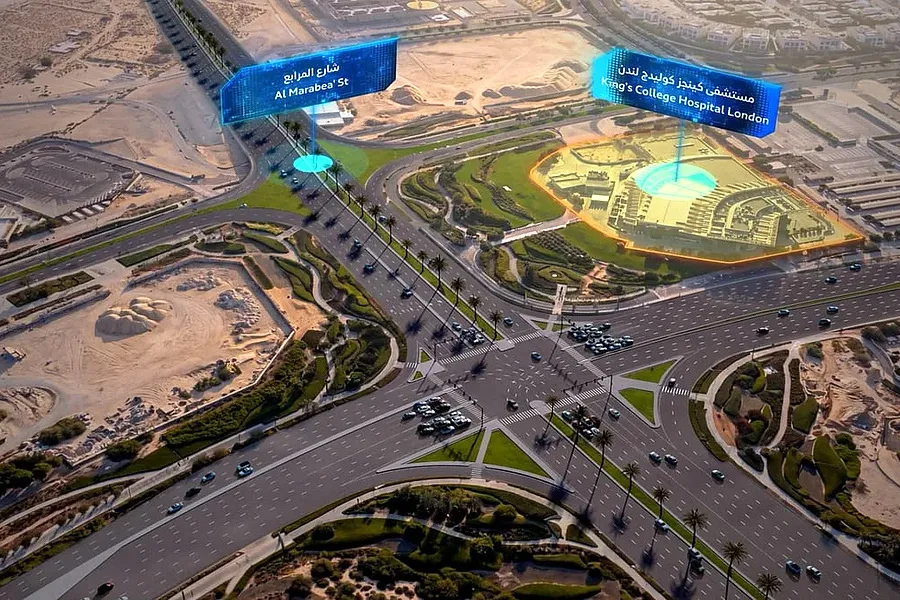
- Al Marabea’ Street
- Muscat Street
- Dubai–Al Ain Road
- Sheikh Mohammed bin Zayed Road
Al Marabea’ Street will also be extended towards Sheikh Mohammed bin Zayed Road, creating another direct link between residential areas and Dubai’s wider road network.
This integrated layout should give motorists more route options instead of forcing a large share of daily traffic onto the same highways.
Key Facts About the New Highway
The scale of the project reflects its importance within Dubai’s long-term infrastructure strategy.
| Project feature | Confirmed detail |
|---|---|
| Total investment | AED 1.161 billion |
| Roads included | 17 kilometres |
| Bridges included | 3.7 kilometres |
| Increase in north–south capacity | 18% |
| Expected travel-time reduction | 30 minutes to 10 minutes |
| Areas served | Communities with over 500,000 residents |
| Scheduled completion | End of 2028 |
| Additional infrastructure | Cycling tracks and underpasses |
The expected reduction from 30 minutes to 10 minutes applies to journeys between the Al Manama Street and Dubai–Al Ain Road area and Umm Suqeim Street. This represents an estimated travel-time improvement of 66%.
How the Project Will Be Developed
Because of its size and engineering complexity, the work has been divided into two major construction packages. This approach is intended to accelerate delivery while ensuring that the different roads, bridges and intersections function as one connected system.
First Section: Al Meydan Street and Al Marabea’ Street
The first section covers approximately 14 kilometres. It includes the development of Al Meydan Street between Latifa bint Hamdan Street and Umm Suqeim Street, along with improvements to Al Marabea’ Street between Dubai Hills and Sheikh Mohammed bin Zayed Road.
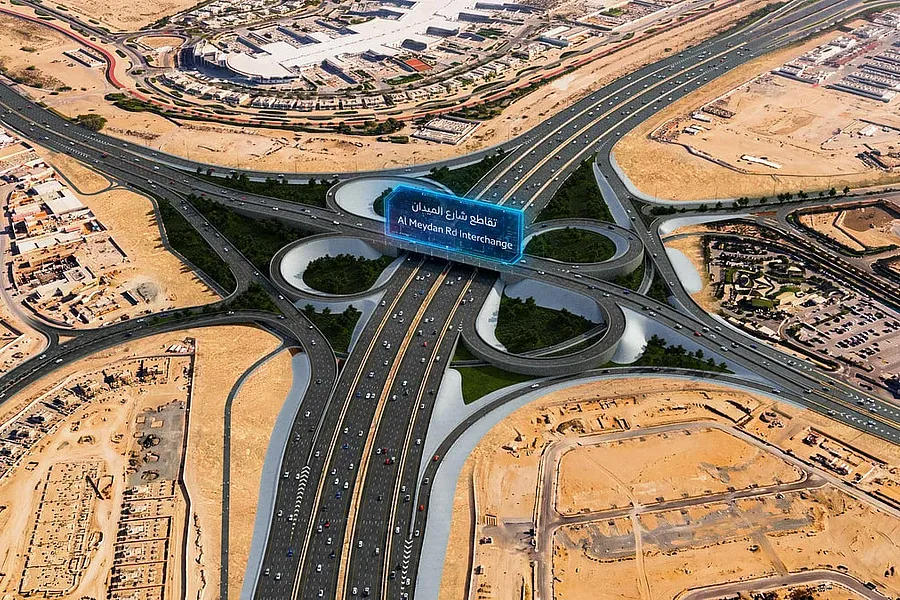
A major part of this section will be the conversion of the Al Marabea’ Street and Al Meydan Street intersection into a grade-separated interchange.
The new interchange will include:
- Four lanes in each direction
- Approximately 1,600 metres of bridges
- Free-flow movement in every direction
- Capacity for around 14,400 vehicles per hour
- A direct connection between Umm Suqeim Street and Latifa bint Hamdan Street
A separate three-lane connection in each direction will link Al Marabea’ Street with Sheikh Mohammed bin Zayed Road. This connection is expected to accommodate approximately 7,800 vehicles per hour.
The plans also include a 700-metre elevated link on Dubai–Al Ain Road towards Nad Al Hamar Street. This should improve accessibility for Nad Al Sheba and strengthen its connection with the main road network.
Second Section: First Al Khail Street to Muscat Street
The second section will develop Al Meydan Street from First Al Khail Street, across Al Khail Road and towards Muscat Street.
Approximately two kilometres of new surface roads will connect Al Meydan Street with Latifa bint Hamdan Street. Improvements will also be made around the Al Khail Road collector road towards Ras Al Khor Street.
The existing signal-controlled intersection at Al Meydan Street and Muscat Street will be replaced with a multi-level interchange.
This interchange is planned to include:
- Four lanes in each direction
- Approximately 1,400 metres of bridges
- Free-flow traffic movement
- Capacity for up to 14,400 vehicles per hour
Removing the conventional signal-controlled layout should reduce waiting times and allow traffic to move more continuously through the area.
Which Dubai Communities Could Benefit?
The upgraded corridor is expected to improve connectivity for several established and developing areas, including:
- Dubai Hills
- Nad Al Sheba
- District One
- Al Barari
- Communities around Al Meydan Street
- Communities around Latifa bint Hamdan Street
- Residential areas connected to Dubai–Al Ain Road
- Developments near Umm Suqeim Street
More than 500,000 residents across the wider service area are expected to benefit from the project.
The precise effect will vary by location. Communities with direct entry and exit points may experience the greatest improvement, while nearby areas could benefit indirectly through better traffic distribution and reduced pressure on surrounding roads.
How Could the Highway Affect Dubai Real Estate?
Major infrastructure projects can influence property markets by changing how conveniently people can reach homes, workplaces, schools and lifestyle destinations.
The new highway does not automatically guarantee higher property values. However, improved access can strengthen the long-term appeal of areas connected to the corridor.
Improved Accessibility
Convenient road access remains an important consideration for both buyers and tenants in Dubai.
A community may offer attractive homes and amenities, but difficult peak-hour access can reduce its practical appeal. Alternative routes and free-flow interchanges can make such locations more convenient for everyday living.
Shorter Daily Commutes
The planned reduction in travel time could be particularly relevant to residents travelling between central, eastern and southern parts of Dubai.
A shorter and more predictable commute can affect residential decisions, especially for professionals and families who regularly travel between different districts.
Greater Interest in Connected Communities
Areas positioned near new transport corridors often receive increased attention as completion approaches. Buyers may begin comparing current prices with the area’s expected accessibility after the infrastructure becomes operational.
However, investors should assess the actual distance between a property and the planned access points. Being near a highway on a map does not always mean that a development will have convenient entry or exit access.
Support for New Development Areas
Large road projects make it easier for growing communities to accommodate additional residents, businesses and services.
Improved infrastructure can therefore support further residential development without placing the entire traffic burden on existing arterial roads. This is particularly important in parts of Dubai experiencing rapid construction and population growth.
Potential Rental-Market Benefits
Tenants often prioritise commute times, road access and proximity to essential destinations. Communities that become easier to reach may appeal to a broader tenant base once the project is complete.
Rental performance will still depend on factors such as property quality, supply, community facilities, maintenance and pricing. Connectivity is influential, but it is only one part of the overall equation.
A Wider Network Rather Than a Standalone Road
The Al Meydan Street project is designed to work alongside another 12-kilometre strategic corridor connecting Sheikh Zayed Road with Emirates Road.
Together, the two projects will create stronger links between:
- Sheikh Zayed Road
- Al Khail Road
- Al Meydan Street
- Sheikh Mohammed bin Zayed Road
- Sheikh Zayed bin Hamdan Al Nahyan Street
- Emirates Road
The accompanying corridor is expected to accommodate more than 130,000 daily journeys and reduce travel time between Umm Al Sheif Street and Emirates Road from 33 minutes to approximately 15 minutes. It is also scheduled for completion by the end of 2028.
This broader integration is significant because congestion cannot usually be solved by upgrading one road alone. A connected system provides motorists with alternative routes and helps distribute traffic across multiple corridors.
Cycling Infrastructure Is Also Included
The development is not limited to vehicles. It will include cycling tracks and underpasses beneath Al Meydan Street, maintaining safe and continuous connections with Dubai’s existing cycling network.
This element supports a more integrated approach to mobility. It may also improve recreational access between communities and encourage short-distance travel without requiring residents to use a car for every journey.
For residential areas, well-connected cycling infrastructure can contribute to lifestyle appeal, particularly when routes connect homes with parks, retail areas and neighbouring communities.
What Property Buyers Should Consider
Buyers evaluating properties near the new highway should look beyond the headline announcement and examine the practical details.
Important considerations include:
- Distance from the nearest interchange
A property may be close to the corridor but far from a convenient access point. - Expected construction activity
Temporary diversions, noise and changing traffic patterns may occur while work is underway. - Direction of travel
Buyers should confirm whether the planned connections support the routes they use most frequently. - Current and future supply
Improved infrastructure may encourage additional development, which could increase both demand and property supply. - Completion timeline
The project is scheduled for the end of 2028, but buyers should avoid making short-term decisions based entirely on infrastructure that is still under construction. - Overall community quality
Road access should be considered alongside build quality, facilities, service charges, schools, retail options and long-term neighbourhood planning.
What Investors Should Watch Before 2028
As work progresses, investors should monitor several indicators:
- Confirmation of interchange locations
- New entry and exit points
- Construction milestones
- Changes in travel times
- Residential transaction activity
- Rental demand in connected communities
- New project launches near the corridor
- Changes in road noise or traffic exposure
- Availability of pedestrian and cycling connections
Properties offering convenient access without excessive exposure to road noise may be better positioned than units facing the highway directly.
Frequently Asked Questions
What is the new highway being built in Dubai?
The project is a major redevelopment of Al Meydan Street into a strategic road corridor supporting Al Khail Road and Sheikh Mohammed bin Zayed Road.
How much will the project cost?
The two main construction packages have a combined value of AED 1.161 billion.
When will the new highway be completed?
The project is scheduled for completion by the end of 2028.
How much will the highway reduce travel time?
Journey time between the Al Manama Street and Dubai–Al Ain Road area and Umm Suqeim Street is expected to decrease from 30 minutes to approximately 10 minutes.
Which areas will benefit from the new road?
The wider network is expected to improve access to Dubai Hills, Nad Al Sheba, District One, Al Barari and communities around Al Meydan Street and Latifa bint Hamdan Street.
Will the project include cycling routes?
Yes. The plans include cycling tracks and underpasses connected to the existing cycling network.
Will nearby property prices increase?
Improved connectivity may strengthen demand, but price growth is not guaranteed. Property values also depend on supply, location, quality, facilities and wider market conditions.
Final Thoughts
Dubai’s new Al Meydan highway represents more than an additional road. It is part of a connected infrastructure programme intended to improve mobility between major corridors, reduce travel times and prepare growing communities for future population and development.
With 17 kilometres of roads, 3.7 kilometres of bridges, multi-level interchanges and cycling connections, the project could materially improve how residents move between several important districts.
For property buyers and investors, its greatest potential lies in improved accessibility. The strongest opportunities are likely to be found in well-planned communities that gain convenient access to the corridor while continuing to offer good homes, amenities and long-term liveability.
Infrastructure may not be the only factor shaping Dubai real estate, but it remains one of the clearest signals of where the city expects future growth to happen.
Source : Gulf News