How New Rail Links Could Reshape Dubai Property Demand
Dubai Metro property demand could enter a new phase as planned rail connections improve access between residential communities, employment districts and major transport hubs. For buyers and tenants, this matters because the meaning of a “good location” may gradually shift. Instead of paying only for proximity to the city centre, more residents could begin weighing travel time, station access and overall connectivity when choosing where to live.
Communities such as Jumeirah Village Circle (JVC), Meydan, Dubai Silicon Oasis and Dubai South are increasingly in focus. These areas already attract residents for different reasons, but stronger rail access could reduce one of their main limitations: dependence on road travel.
Why Better Connectivity Can Influence Property Demand
Transport infrastructure can change how practical a neighbourhood feels. A community that once appeared too far from work may become more attractive when residents can reach business districts without relying entirely on peak-hour traffic.
This does not mean central locations will lose their appeal. Established areas near business and lifestyle districts still offer convenience, prestige and mature amenities. However, improved public transport can widen the number of communities that renters and buyers consider realistic alternatives.
Key factors likely to influence demand include:
- Shorter and more predictable commuting options
- Easier access to employment and education districts
- Greater flexibility for residents seeking more space at different price points
The result could be a broader residential market where connectivity matters almost as much as distance.
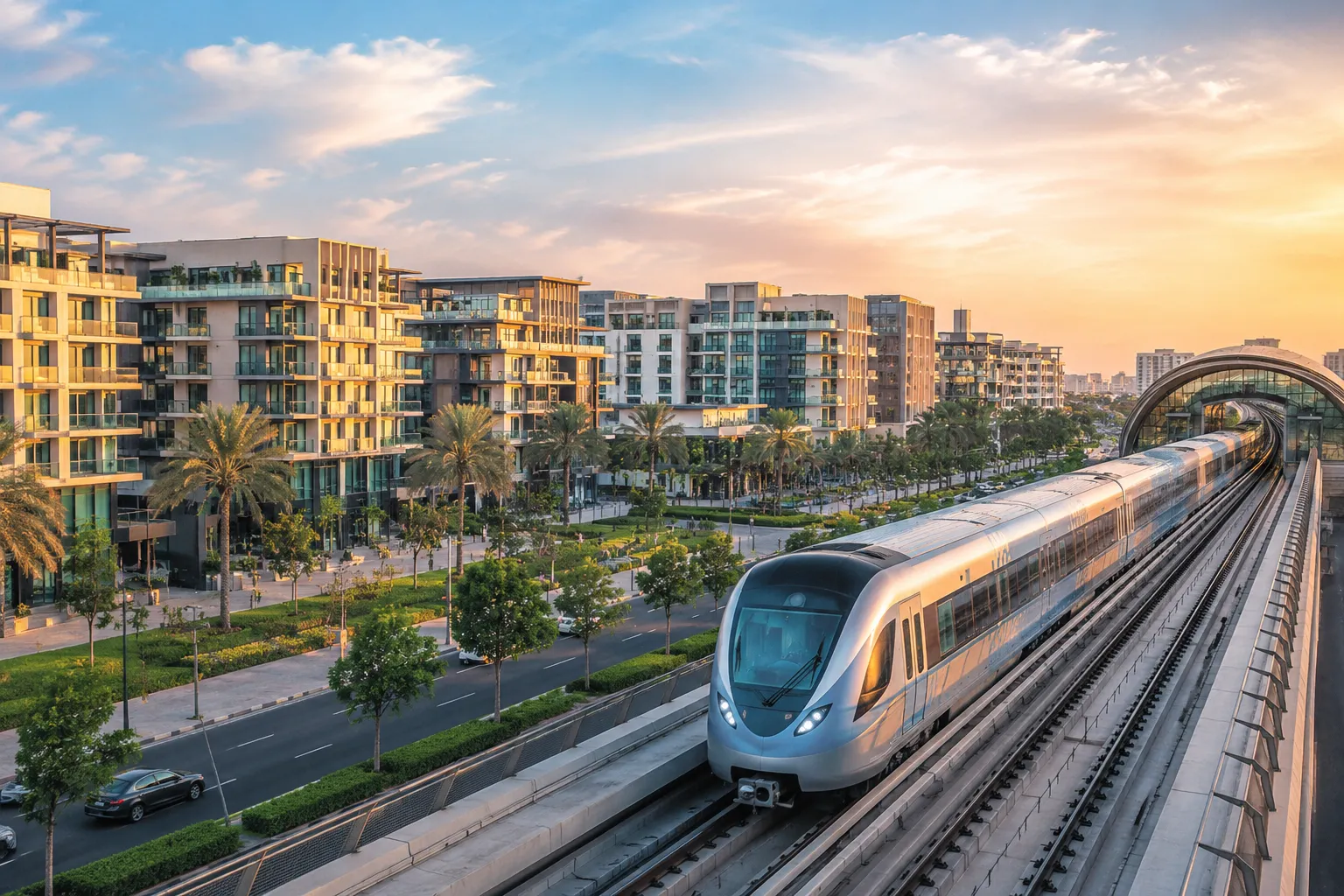
Dubai Silicon Oasis and Eastern Communities Gain Attention
Blue Line Could Improve Direct Metro Access
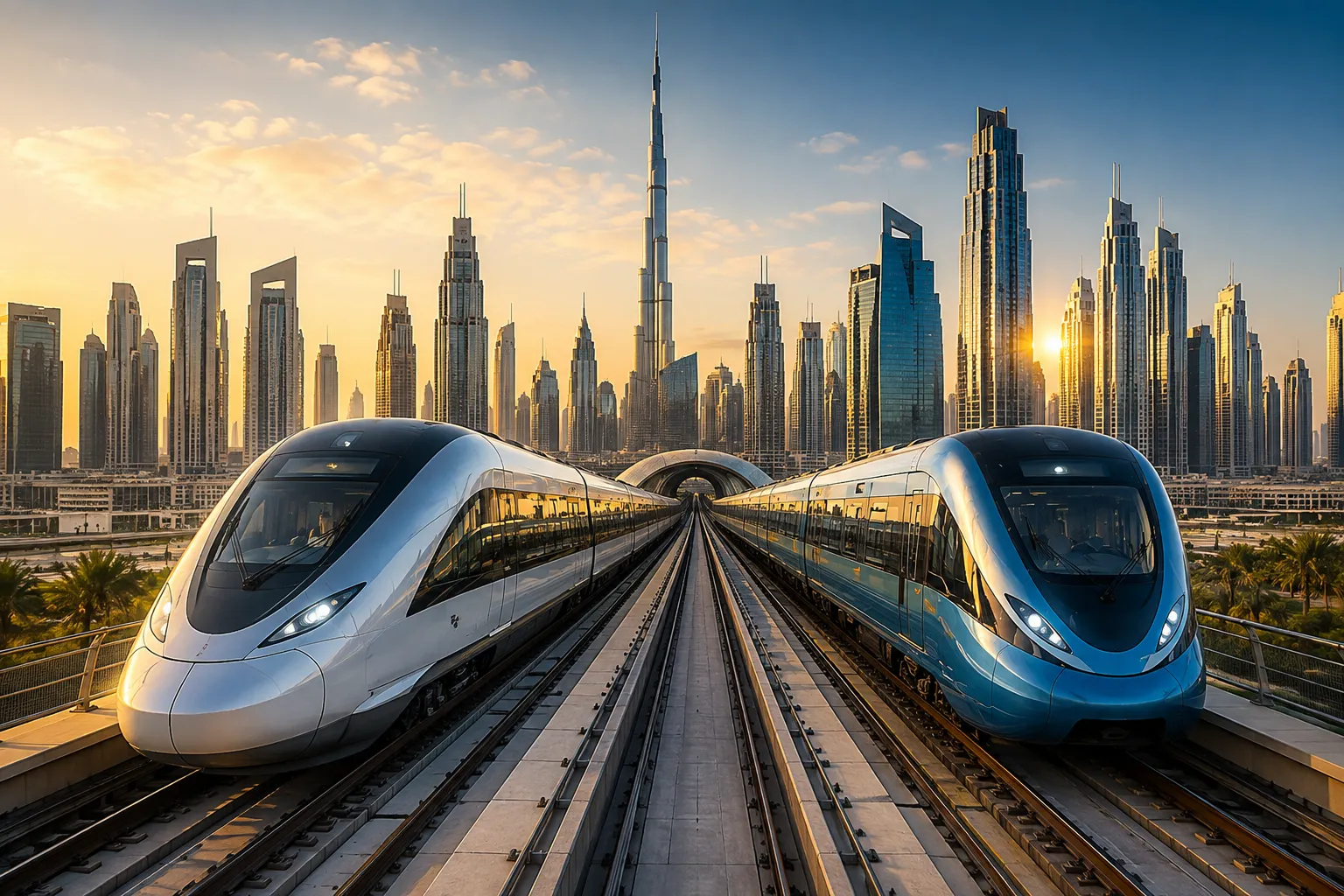
The Metro Blue Line is planned as a 30-kilometre route with 14 stations and is targeted to open on September 9, 2029. It is expected to connect several eastern districts that currently have more limited direct rail access, including Dubai Silicon Oasis, International City, Academic City, Mirdif and Al Warqa.
For Dubai Silicon Oasis, improved rail access could be especially important because the area combines homes, workplaces, schools and nearby academic districts. Better connections may increase its appeal among professionals, students and families who want an established community without relying on a car for every journey.
International City may also benefit, particularly among price-conscious tenants who previously viewed commuting as a disadvantage.
JVC and Meydan Could Benefit From Future Expansion
Location May Be Judged More by Access Than Distance
Jumeirah Village Circle has grown into a major residential area despite lacking direct Metro access. Future rail expansion could strengthen its position by making daily travel more convenient for residents working across Dubai.
Meydan could see a similar effect. Its location already provides access to important parts of the city, but additional rail connectivity could make it more practical for a wider group of tenants and homeowners.
Other communities associated with the proposed Gold Line corridor include Jumeirah Golf Estates, Al Barsha South, Nad Al Sheba and Mohammed Bin Rashid City. If these connections progress as planned, demand could become less concentrated around neighbourhoods that already have mature Metro access.
Transport alone, however, will not determine performance. Buyers should still assess housing quality, community amenities, future supply and long-term livability. A station can improve accessibility, but it cannot replace good community planning.
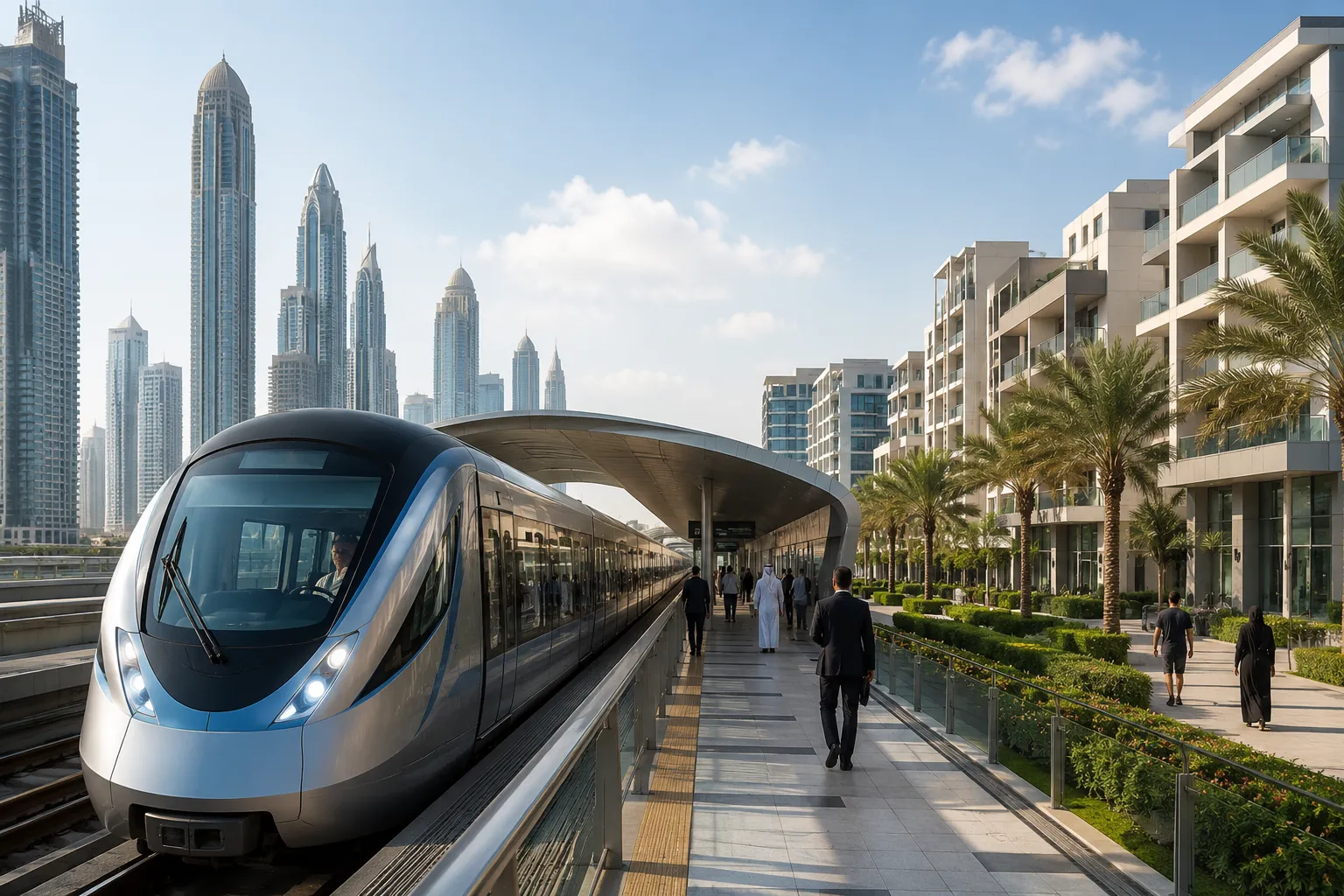
Dubai South Has a Different Connectivity Story
Dubai South stands out because its future demand may be influenced by both city transport improvements and wider inter-emirate rail connectivity. The area combines residential growth with employment, logistics and aviation-related activity, creating a different demand profile from purely residential communities.
Stronger connections between Dubai and other emirates could make the area more attractive to people who travel frequently for work. It may also support residents who prefer to live closer to large employment zones while maintaining access to the wider city.
This could gradually expand the tenant and buyer pool as transport links, community services and new housing mature together.
What Could This Mean for Buyers and Tenants?
Improved rail access may give residents more freedom to choose homes based on space, budget and lifestyle rather than commute distance alone. Areas that once felt inconvenient could become realistic options if travel becomes faster and more predictable.
For investors, the key is not simply to buy near a proposed station. Future demand is more likely to depend on a combination of transport access, pricing, housing quality, amenities and local employment.
The Bigger Picture for Dubai Property
Dubai’s next stage of residential growth may increasingly follow its transport network. As new lines connect previously car-dependent communities, property demand could spread across a wider range of neighbourhoods.
JVC, Meydan, Dubai Silicon Oasis and Dubai South are worth watching because each could gain from improved accessibility in a different way. The strongest opportunities are likely to be where transport improvements are matched by solid community fundamentals, sensible pricing and long-term livability.