Dubai’s AI-Powered Investor Health Index: A New Era of Transparency in Real Estate
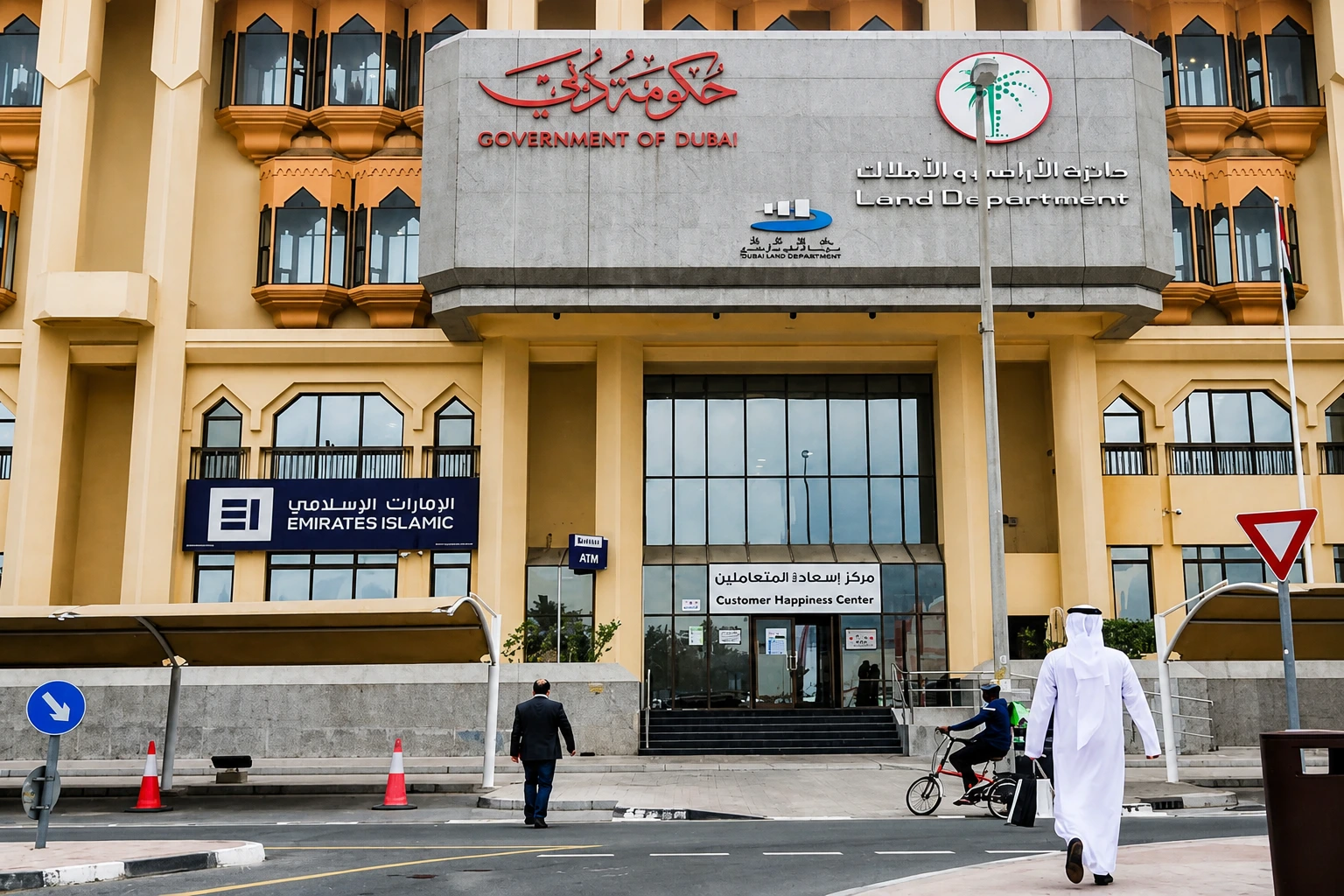
The Dubai Land Department (DLD) has unveiled a new AI-driven Investor Health Index (IHI) to boost long-term market stability and investor confidence in Dubai’s property sector.
This tool aggregates and analyzes building- and transaction-level data to produce a “health score” for each residential project, providing buyers with transparent, real-time information on property conditions.
By quantifying factors like service-charge payment reliability, maintenance response times, and rental yield history, the Index aims to ground prices in fundamentals and prevent speculative “hype” pricing.
It is intended especially for secondary-market purchasers and international investors, acting as a digital due-diligence aide that signals whether a building is well-managed and sustainable.
In doing so, the DLD expects the IHI to narrow informational gaps, reward higher-quality properties, and ultimately create a more mature and transparent market.
Why the Investor Health Index Matters
The Investor Health Index is explicitly designed to ensure market stability by enhancing transparency and protecting capital in Dubai’s real estate market.
By providing an objective, data-backed score for each major residential project, the IHI empowers secondary-market buyers—especially first-time and foreign investors—with information that was previously opaque.
Instead of relying on marketing or market sentiment, investors gain visibility into a building’s actual performance, occupancy, and upkeep.
In effect, the tool democratizes what was once expert-only knowledge, narrowing the information gap between retail investors and institutional players.
A Step Toward a Mature, Data-Driven Market
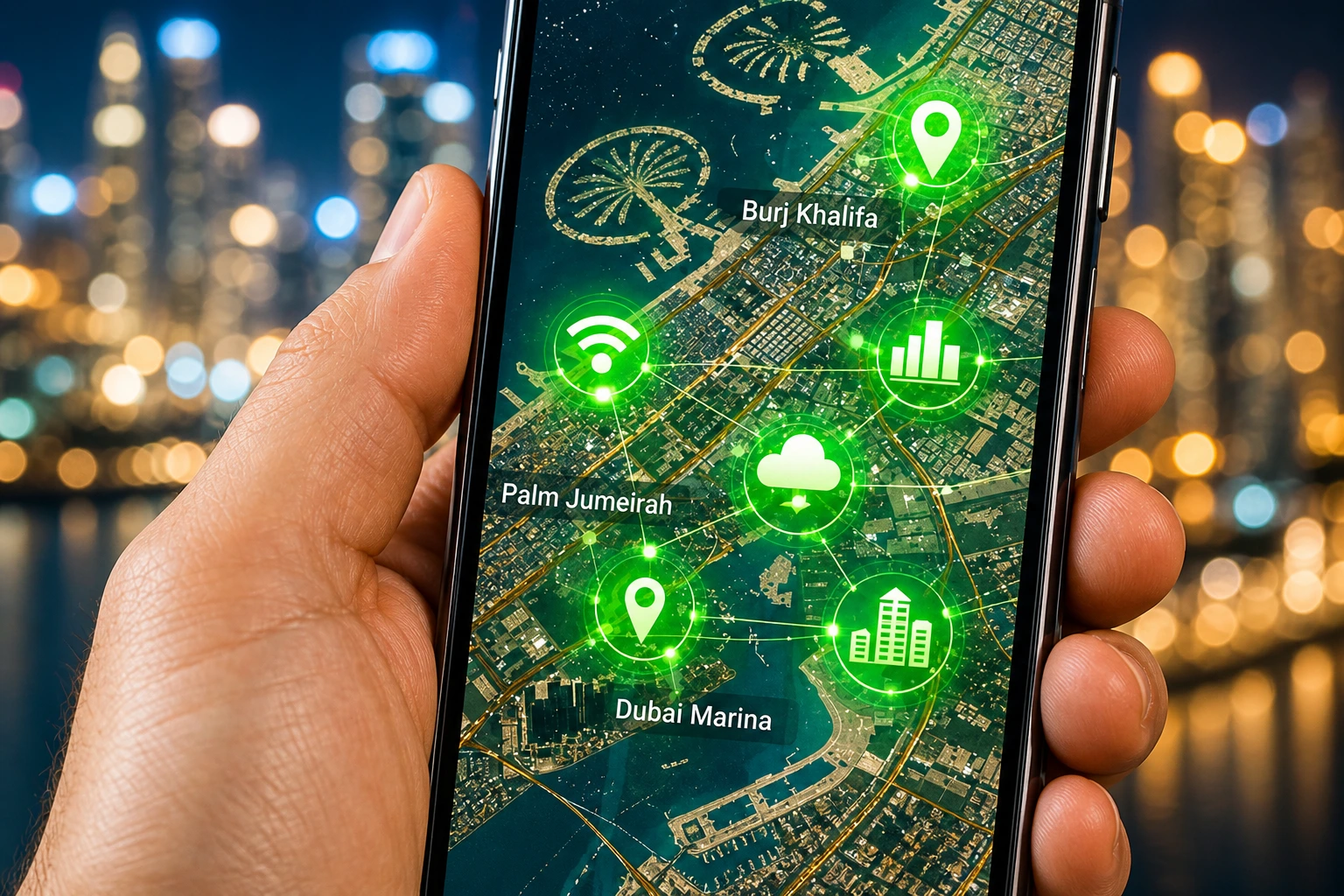 The broader government objective is to transform Dubai into a mature market by making actionable data widely available.
DLD officials expect this to channel demand toward high-scoring (well-maintained) properties, rewarding them with stable demand and encouraging all owners to meet higher standards.
In summary, the Index’s goals are to foster stable, long-term growth, boost confidence by curbing speculation, and incentivize developers and homeowners’ associations to maintain their properties to the highest standards.
How AI Powers the Index
The IHI is powered by machine learning algorithms that continuously process a wide range of data on each building.
The system aggregates thousands of data points, including historical and real-time indicators.
Key Data Inputs Include:
- Service charge and payment histories
- Maintenance and facilities performance
- Occupancy and usage levels
- Financial performance such as rental yields
- Additional indicators like building age or service quality
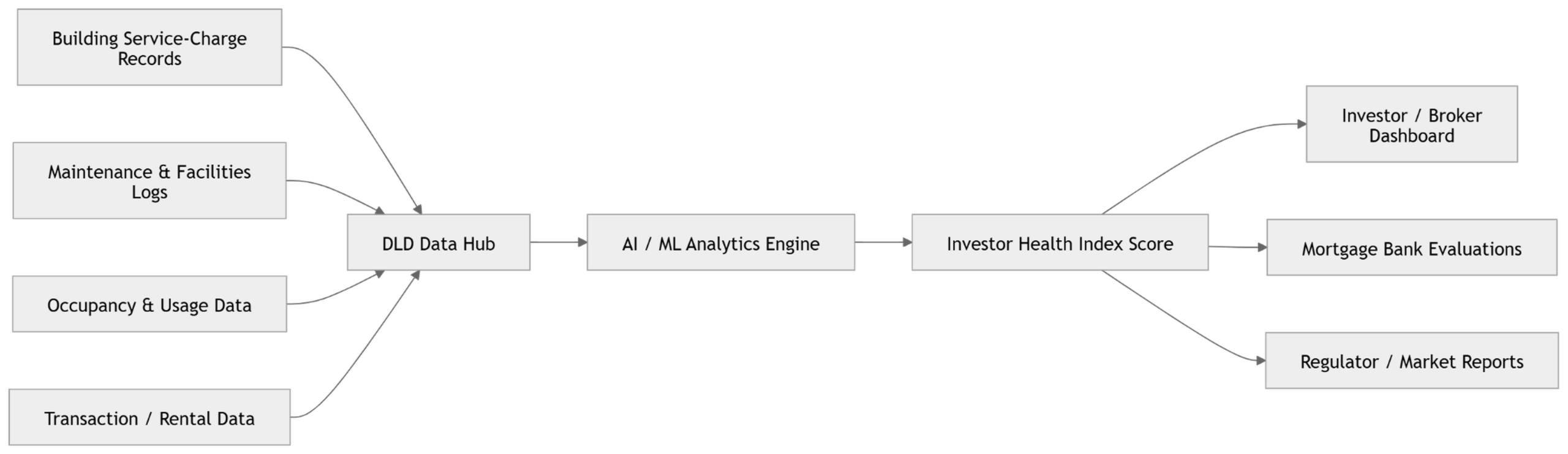 The system normalizes and weights these factors to produce a single Health Score, updated in real time as new data becomes available.
In essence, the IHI functions like a property credit rating—providing an at-a-glance view of a building’s overall health and sustainability.
| Attribute | Details |
|---|---|
| Purpose | Provide a data-driven “health” score for each residential project to enhance market stability and investor confidence. |
| Data Sources | Aggregated DLD data on service-charge payments, maintenance response, occupancy rates, rental yields, and other building performance metrics. |
| AI Method | Machine-learning analytics that normalize and weight these inputs into a composite score. Exact algorithms not disclosed; likely continuous real-time computation. |
| Update Frequency | Real-time or near-real-time updates as new data arrive (implied by “real-time data”); likely monthly/quarterly refresh to capture market changes, similar to the Smart Rental Index. |
| Governance | Managed by Dubai Land Department (RERA), following Dubai’s digital governance framework. Methodology expected to be transparent to stakeholders (as with prior DLD indices). |
| Transparency | Scores publicly accessible to investors, brokers, banks via DLD portals. Criteria and index logic to be published to ensure trust, mirroring DLD’s open-data approach. |
| Privacy | Uses only aggregated building-level data; no personal identifiers exposed. Data handling protected under UAE privacy laws and DLD policies (no official details yet). |
| Expected Outcomes | Increased investor confidence, incentivized property maintenance, integration into mortgage underwriting (better loan terms for high-score buildings), and more stable pricing. |
| Potential Risks | Data gaps or biases could mis-score buildings; over-reliance on the index; displacement of non-scored factors; initial stakeholder resistance. Mitigations include algorithmic oversight, clear disclosures, and phased adoption. |
Governance, Transparency & Privacy

The Investor Health Index is overseen by the Dubai Land Department and operates within Dubai’s regulatory framework for real estate and data.
Transparency
The Index is intended to be publicly accessible, providing upfront information to investors through digital platforms.
Data Privacy
Data is aggregated at the building level, ensuring that no personal or identifiable information is disclosed.
Strict privacy policies and cybersecurity measures are expected to safeguard all data used in the system.
Governance
The DLD is expected to follow clear methodologies and continuously refine the model, ensuring credibility and trust in the Index.
Impact on Investors and the Market
Reducing Speculation
The Index helps ground property values in real performance, reducing hype-driven pricing and market volatility.
Boosting Investor Confidence
Buyers gain access to objective insights, enabling more informed decisions—especially for international investors entering the market.
Influence on Mortgage and Lending
Financial institutions are already exploring how to integrate IHI scores into loan approvals, potentially offering better terms for high-scoring properties.
Encouraging Better Property Management
Developers and homeowners’ associations are incentivized to improve maintenance and operational standards to achieve higher scores.
Stakeholders and Adoption
The Investor Health Index was officially launched on May 5, 2026, with continuous real-time updates expected.
Key Stakeholders:
- Investors and buyers using the Index for due diligence
- Brokers incorporating scores into advisory services
- Developers and homeowner associations improving property standards
- Banks integrating scores into risk assessment and lending
Global Context and Innovation

The IHI represents a significant innovation in real estate markets globally.
While similar concepts exist—such as rental indices or building certifications—few systems offer a dynamic, AI-driven score tailored specifically for investors.
The Index aligns with broader trends in using AI for financial decision-making, similar to credit scores or ESG ratings.
Challenges and Considerations
Despite its promise, the Index comes with potential challenges:
- Data quality and completeness
- Algorithmic bias and weighting decisions
- Risk of over-reliance on a single score
- Privacy concerns
- Market adoption and behavioral change
Addressing these will be critical to ensuring the Index’s long-term success and credibility.
Final Thoughts
Dubai’s AI-powered Investor Health Index marks a major step toward a more transparent, data-driven real estate market.
By translating complex building performance metrics into a simple, accessible score, it empowers investors, enhances trust, and promotes long-term sustainability.
As adoption grows, the IHI is poised to influence not only buying decisions but also lending practices and regulatory oversight—reinforcing Dubai’s position as a global leader in real estate innovation.
Sources:
- PropertyNews.ae
- Dubai Land Department (DLD)
- UAE Government Media Office
- Gulf News
- Khaleej Times